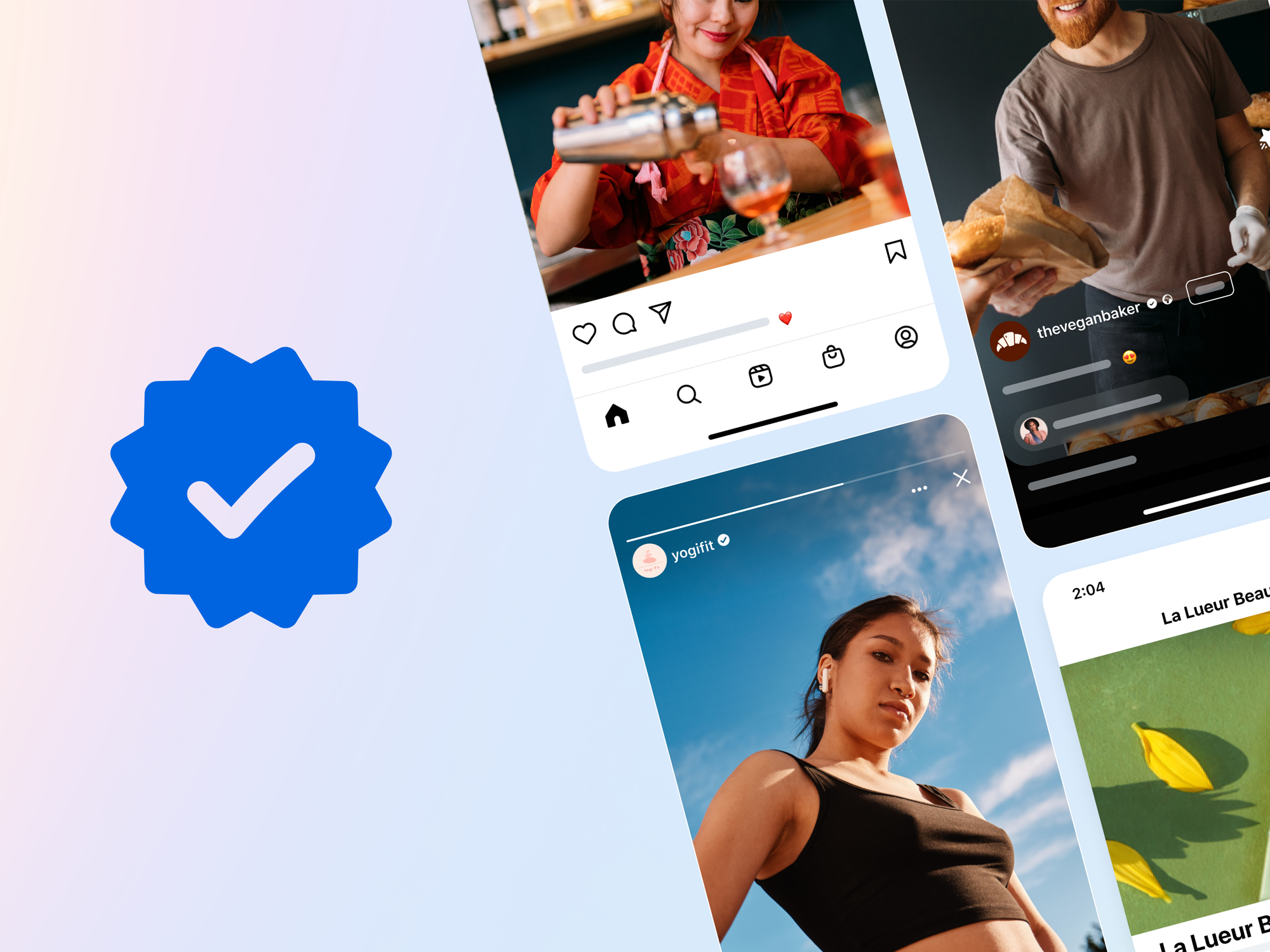
In 2026, the Instagram blue tick is no longer a simple badge of public significance. It has become two different products under one symbol: legacy verification, rooted in notability and media presence, and Meta Verified, a paid identity-and-support subscription. That distinction matters more than most founders, creators, and operators realize.
For businesses building in public, the blue tick now sits at the intersection of trust, impersonation risk, customer support, and brand positioning. For users, it can signal authenticity. For investors and startup teams, it raises a more practical question: is verification still an earned reputation marker, or is it now mostly an operational tool?
The answer in 2026 is nuanced. Free verification still exists in certain forms, but the center of gravity has shifted toward paid verification through Meta Verified. If you are deciding whether to apply, subscribe, or ignore the badge entirely, the real issue is not status. It is whether the badge changes outcomes that matter: reach, credibility, security, support, and conversion.
Why the blue tick means something different now
Instagram verification used to be framed primarily as a scarcity signal. A blue badge implied a person or brand had crossed some threshold of public relevance, press coverage, and impersonation risk. That older model aligned with celebrity culture, journalism, politics, sports, and high-profile founders.
Meta changed the economics of verification by introducing a paid tier. In practice, that moved the conversation from “Are you notable enough?” to “Do you need identity assurance and platform protections enough to pay for them?”
That shift reflects a broader platform trend:
- Identity is now infrastructure, not just prestige.
- Support access has become monetized on major platforms.
- Impersonation and account takeovers are more common as creator and startup brands grow.
- Trust signals affect conversion, especially in DMs, creator commerce, and customer acquisition.
In other words, the blue tick in 2026 tells a weaker story about fame than it used to, but a stronger story about account legitimacy and account management priorities.
Free verification versus Meta Verified: the practical difference
Many people still search for “free Instagram blue tick” as if it were the default path. It is not. The more accurate framing is this: there are now two verification pathways with different logic.
| Criteria | Free / Legacy Verification | Meta Verified |
|---|---|---|
| Primary basis | Notability, public interest, media coverage, authenticity | Paid subscription plus identity verification requirements |
| Main purpose | Signal public significance and authenticity | Identity assurance, support access, impersonation protection, added account benefits |
| Availability | Limited and selective | Broader, subject to region, eligibility, and policy rules |
| Cost | No application fee in the traditional sense | Monthly or recurring subscription |
| Approval difficulty | High for most applicants | Usually easier if requirements are met |
| Press coverage needed | Often yes | Typically no, though authenticity checks still apply |
| Support access | Not the core value | One of the major reasons users subscribe |
| Best fit | Public figures, notable founders, media-visible brands | Creators, operators, startup leaders, and small brands needing trust and protection |
The badge may look similar on the surface, but the value proposition is different. Legacy verification is reputational. Meta Verified is operational.
Why Meta turned verification into a subscription product
From a business perspective, Meta Verified is easy to understand. Platforms have learned that trust, support, and security can be bundled into a subscription layer. This creates recurring revenue while addressing genuine user pain points.
That pain is real:
- High-value accounts are targets for impersonation.
- Creators and founders often struggle to get human support when locked out.
- Small businesses need visible trust signals in crowded attention markets.
- People increasingly monetize personal brands, making identity protection commercially important.
For Meta, verification as a paid service also scales better than a purely editorial process based on fame. Determining “notability” is subjective, labor-intensive, and controversial. A subscription framework is easier to standardize, even if it weakens the exclusivity of the badge.
That does not mean the paid route has no merit. It means the badge now represents a broader set of platform economics than it did in the past.
What a blue tick changes in 2026, and what it absolutely does not
The biggest misunderstanding around Instagram verification is that it guarantees reach. It does not.
What verification can help with
- Trust at first glance: Useful when someone discovers your brand through Reels, search, ads, or DM referrals.
- Lower impersonation risk: Especially important for startup founders, creators, and e-commerce operators.
- Faster account issue handling: Often one of the most practical reasons to pay.
- Stronger conversion in profile visits: A badge can reduce hesitation when users decide whether to follow, message, or buy.
- Better credibility in partnership outreach: Helpful in creator deals, investor-facing visibility, and media interactions.
What verification does not guarantee
- Algorithmic growth or automatic reach increases
- Higher engagement without strong content and audience fit
- Authority in your category if your profile lacks substance
- Investor trust on its own
- Brand legitimacy if your website, messaging, and product experience are weak
For startups, this distinction is critical. A blue tick can improve confidence at the margin. It cannot fix poor positioning, vague messaging, or weak distribution.
Who should pursue free verification, and who should simply pay
This is where strategy matters. The right path depends on your business model, public visibility, and risk profile.
Go after free or legacy verification if:
- You are a public-facing founder already covered by credible media outlets.
- Your brand is frequently searched and discussed publicly.
- You face meaningful impersonation because of visibility, not just ambition.
- Your startup has clear public notability in a market, sector, or geography.
Legacy verification still makes sense when public significance is already established. In that case, paying for a badge can feel unnecessary, or even less aligned with your public positioning.
Choose Meta Verified if:
- You are an early-stage founder building a public brand.
- You run a creator-led business or service business from Instagram.
- You rely on DMs, profile traffic, or audience trust for revenue.
- You need better account support and stronger identity protection.
- You do not have enough press coverage to qualify for traditional notability-based review.
For most builders in 2026, Meta Verified is the more realistic path. It is not a shortcut to status, but it can be a useful operating expense.
The founder lens: verification as trust infrastructure, not vanity
Founders often make two opposite mistakes. The first is dismissing verification as superficial. The second is overvaluing it as a growth hack. Both are wrong.
The better way to think about a blue tick is as part of a digital trust stack. That stack includes:
- A consistent handle across platforms
- A secure and professionally branded website
- Clear bio positioning
- Public proof of work
- Press or market credibility where relevant
- Strong account security practices
- Fast support access when issues arise
If your startup acquires customers through founder-led content, social proof matters. A badge can reduce friction, especially in high-noise niches such as AI tools, consulting, education, wellness, creator commerce, and B2B personal branding.
But if your product wins through outbound sales, partnerships, or SEO, the marginal value may be lower. In that case, the subscription only makes sense if support access and impersonation protection justify the cost.
Where the economics make sense for startups and creators
Verification should be evaluated like any other recurring software expense: through expected return.
Ask four questions:
- Does my profile influence revenue?
- Would account loss or impersonation create financial damage?
- Do I need reliable support if something breaks?
- Does visible identity assurance improve conversion?
If the answer is yes to at least two of those, paid verification can be rational.
It is especially defensible for:
- Solo founders with a strong personal brand
- Agencies selling through Instagram authority
- Creators monetizing community trust
- Consumer startups using Instagram as a top-of-funnel channel
- Operators in markets where fake accounts frequently appear
It is harder to justify for:
- Stealth startups with limited public presence
- Product-led businesses with little Instagram dependency
- Teams treating the badge mainly as a prestige symbol
Expert Insight from Ali Hajimohamadi
The biggest strategic mistake founders make with verification is assuming the badge creates authority. It doesn’t. Authority comes from repeated proof of execution. The badge only reduces doubt around identity.
If you are an early-stage founder, use Meta Verified when Instagram is part of your trust funnel. That means people check your profile before buying, booking, partnering, or replying. In that case, the subscription is not vanity. It is customer-friction reduction.
When should you avoid it? If your audience does not care, your account is not commercially important, or your product has no founder-led distribution angle. Paying for verification without a content strategy, offer clarity, and profile credibility is like buying a premium storefront in an empty street.
Another founder mistake is chasing free verification too early. Many startups try to “look bigger” before they are genuinely notable. That usually leads to weak applications, low-quality PR tactics, and wasted time. Traditional verification works best when notability already exists organically through traction, press, partnerships, or public relevance.
My view for 2026 and beyond is clear: verification will increasingly separate into identity layers, not prestige layers. The market is moving toward paid trust infrastructure, bundled with security and support. The symbolic value of the badge may keep declining, but the practical value can keep rising.
The founders who benefit most will be those who treat verification as part of brand systems, not personal ego.
How to make verification actually useful after you get it
A badge only matters if the rest of your presence is coherent. Once verified, optimize the profile around trust and conversion.
- Align your handle with your company or public identity across platforms.
- Rewrite your bio so it clearly states what you do, for whom, and why it matters.
- Use a real profile image or recognizable brand mark consistently.
- Pin proof-based content such as product demos, case studies, press mentions, or traction updates.
- Link to a strong landing page, not a generic homepage if conversion matters.
- Secure the account with strong passwords, device hygiene, and two-factor authentication where applicable.
Think of verification as the top layer of credibility, not the foundation.
Questions people are really asking in 2026
Is Instagram blue tick free in 2026?
In limited cases, yes. Traditional or legacy verification may still be available for accounts that meet authenticity and notability standards. But for most users, Meta Verified is the more accessible route, and it is paid.
Does Meta Verified improve reach on Instagram?
Not in any guaranteed way. Verification can improve trust and reduce friction, but it does not automatically boost algorithmic distribution.
Is Meta Verified worth it for a startup founder?
It can be, especially if your Instagram profile affects partnerships, customer trust, inbound leads, or creator-style distribution. It is less valuable if Instagram is not strategically important to your business.
Can businesses get Meta Verified, or is it only for individuals?
Availability can vary by market and product rollout, but Meta has expanded verification options across different account types over time. Always check the current official eligibility details inside Meta’s official documentation and account settings.
Does a paid blue tick mean the same thing as old verification?
No. The visual badge may appear similar, but the underlying basis is different. Legacy verification signals notability; Meta Verified signals paid identity verification plus related benefits.
Should founders try free verification first?
Only if they already have real notability. If not, chasing traditional verification too early is often a distraction. In most cases, founders should decide based on business utility, not prestige.
Useful links
- Meta Verified official page
- Instagram Help Center
- Meta Accounts Center
- Instagram official website
- Meta policy and standards hub
In 2026, the smartest question is no longer “How do I get the blue tick?” It is “Which kind of verification solves the problem I actually have?” For some, that problem is public legitimacy. For many more, it is trust, security, and access. The badge looks simple. The strategy behind it is not.